


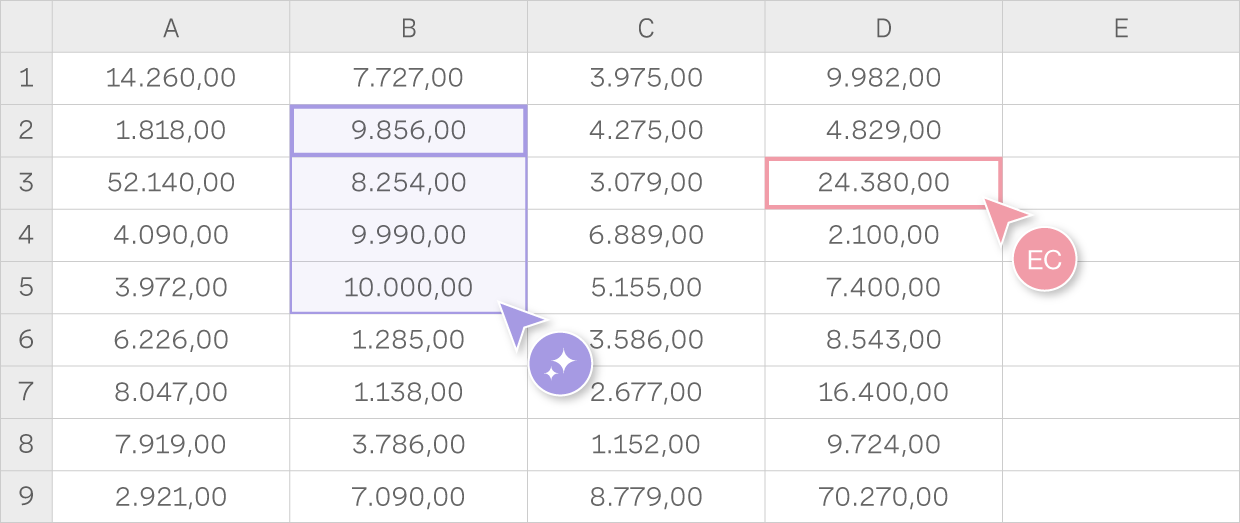
In recent years, AI has taken the world by storm. ChatGPT, Gemini, Claude and other AI technologies are all the rage, with users experiencing the benefits both off and on the clock.
Marketing is no exception. With its ability to automate and optimise processes, AI is an exciting addition to the marketing toolkit. There's a good reason for this. AI has immense potential and can help you see great results, and fast – but only if used wisely. Without human insights, you risk creating generic, impersonal content lacking the authenticity vital for making that essential connection to your target audience.
Think of AI as a creative sparring partner: a smart and efficient tool that supports human creativity and judgement – not as an autopilot that can run the show alone. With AI as your assistant, you can free up time for strategic tasks, allowing your human marketing teams to ensure your communication remains authentic, engaging and relevant.
In this article, we’ll dive into how to balance AI’s efficiency with human intuition and creativity. Learn how together, people and AI can make smarter decisions and create more authentic marketing efforts that resonate with customers while driving results.
|
Key takeaways:
|
The future of AI in marketing
AI is already changing the way marketing professionals work – and these changes will probably continue for years to come. Among other things, AI is helping marketing teams create more precise, targeted campaigns and optimise internal processes, all of which helps generate more value for companies and customers alike.
Instead of sending out generic messages in hopes of landing a hit, AI can analyse vast amounts of data and create hyper-personalised messaging to match the specific situation, needs and business challenges of the target audience.
Simultaneously, AI has the potential to streamline internal workflows, reduce administrative burdens and free up resources for more strategic work.
See how Jo Muncaster, Head of Finance at digiLab, thinks AI will change and improve marketing processes in future. [Timestamp: 25.11 - 26.04]
For a practical example, this means that AI can identify where a potential customer currently finds themselves in the buyer’s journey and adjust the campaign message to better target them. A decision-maker in the early stages of the journey might receive informative content while someone close to making a decision will be presented with concrete offers or case studies.
Staying on top of these dynamics doesn’t just help companies increase engagement and response rates – it also reduces the number of resources wasted on irrelevant outreach.
When it comes to the internal side of things, AI can optimise administrative tasks such as reporting, resource allocation and campaign tracking. For large organisations where complex processes can often halt progress, this makes AI a valuable tool for reducing costs and freeing up time.
Instead of focusing on time-consuming routine tasks, marketing teams can focus on creativity, strategy and relations.
Benefits for companies:
- Increased relevance and engagement: Hyper-personalised messaging ensures customers feel that their preferences and needs are understood and met.
- Effective internal processes: AI reduces administrative burdens and automates repetitive tasks, freeing up time for more strategic activities.
- Better ROI: More precise, optimised workflows ensure that resources are used more effectively, improving results and ensuring the company gets the most out of its investments.
- Stronger customer relationships: Relevant communication that generates value helps build trust and long-lasting customer relationships.
If you’re able to use AI properly, the result is smarter, more effective marketing efforts that significantly improve internal workflows and the customer experience alike.
Use AI as a GPS – not as an autopilot
This is perhaps the most important point of this article: if you want to get the most out of AI, you have to use it wisely. That means using it as an advanced GPS: a tool that can analyse vast amounts of data and show you the most efficient way to achieve your goals. But just like a GPS, you’re behind the wheel – and you’re in charge of making the final decisions.
If you leave everything up to AI and let it run on autopilot, you risk ending up with communication which feels generic and impersonal, and which doesn’t take into account the essentials: the nuances and the human connection that make all the difference.
That’s exactly why you should think of AI as a GPS. It can guide you in the right direction, but it can’t get you safely to your destination alone.
AI can give you valuable insights and suggestions, but it takes human intuition and judgement to gauge tone, timing and relevance – and to get them right.
The human touch ensures that the message doesn’t just reach its target audience, but also resonates with them.
Watch James Keating, CMO of Pleo, talk about the traps you might fall into when relying too heavily on AI. [Timestamp: 29.19 - 29.42]
For example, using AI to analyse customer data, you might discover that a certain group is big on sustainability. AI can map out your route and suggest relevant campaign topics – but it’s up to your marketing to take the wheel and create engaging, authentic content that hits the mark and resonates with your target audience.
Only you can determine if the tone of your message will create the connection with your target audience that you’re looking for.
By balancing the efficiency of AI technology with human insight, you can create campaigns that are both data driven and authentic – and which generate real value for both your company and your customers.